Artificial Intelligence (AI): A Complete Guide to Understanding the Future of Intelligent Machines

Artificial Intelligence, commonly known as AI, has rapidly transformed from a niche scientific concept into one of the most influential technologies shaping the 21st century. In simple terms, AI refers to machines or computer systems that are designed to perform tasks that traditionally require human intelligence—such as learning, reasoning, perception, decision-making, and problem-solving.
In this comprehensive guide, we will explore what AI really is, how it works, the different types of AI, its applications across industries, the ethical challenges it raises, and what the future might hold. Whether you’re a beginner or an enthusiast looking to deepen your understanding, this article will give you a clear and actionable foundation.
1. What Is Artificial Intelligence?
At its core, Artificial Intelligence is a branch of computer science focused on creating machines that can simulate human cognitive functions. It involves building algorithms and systems that allow computers to perform tasks such as recognizing patterns, learning from data, understanding natural language, and making decisions.
Unlike traditional software that follows explicit instructions, AI systems can adapt and improve based on experience—much like human intelligence, but powered by data and computational models. AI is not just one technology; it is a field of technologies that includes machine learning, deep learning, natural language processing, and computer vision.
2. How Does AI Work? The Building Blocks
To truly understand AI, it helps to break down how it works under the hood. Most modern AI systems rely on data and algorithms to learn patterns and make predictions.
Machine Learning (ML)
Machine learning is a subfield of AI where computers learn from data without being explicitly programmed. Instead of writing step-by-step rules, developers train models on large datasets so they can identify patterns and make decisions.
For example, a machine learning model trained on thousands of photos of cats and dogs can learn to recognize whether a new image contains a cat or a dog.
Deep Learning
Deep learning is a specialized type of machine learning that uses artificial neural networks—structures inspired by the human brain. These networks consist of layers of interconnected nodes that transform and analyze data, enabling breakthroughs in tasks like speech recognition and image processing.
Deep learning is what powers many state-of-the-art AI systems today, including voice assistants and autonomous vehicles.
Natural Language Processing (NLP)
NLP allows machines to understand and generate human language. It’s the technology behind chatbots, language translation, and tools that can summarize or interpret text.
Computer Vision
Computer vision enables machines to interpret visual information from images or video. It is widely used in facial recognition, medical imaging analysis, and automated inspection systems.
3. Types of Artificial Intelligence
AI can be categorized in several ways based on capability and functionality:
Narrow AI (Weak AI)
This is the most common form of AI today. Narrow AI systems are designed to perform specific tasks—like playing chess, recommending products, or recognizing speech—but they cannot generalize beyond their training. For example, a language model that writes text cannot drive a car.
General AI (AGI)
Artificial General Intelligence refers to a theoretical type of AI that could perform any intellectual task that a human can do. AGI would be capable of reasoning, learning, and applying knowledge across domains. While AGI remains a topic of research and debate, many experts believe it is still far from realization.
Superintelligent AI
This is a hypothetical future form of AI that surpasses human intelligence across all domains. It raises profound ethical and safety concerns, as its capabilities could far exceed human control.
4. Real-World Applications of AI
AI is no longer a futuristic concept—it’s already deeply embedded in many industries and everyday technologies. Here are some of the most impactful applications:
Healthcare
AI systems are used to analyze medical images, assist in diagnosis, personalize treatment plans, and even predict disease outbreaks. These technologies can process vast amounts of data faster than human experts, enabling earlier detection and better outcomes.
Education
In education, AI helps tailor learning experiences to individual students, provides automated tutoring, and makes education more accessible through adaptive platforms.
Finance
AI is widely used for fraud detection, algorithmic trading, credit scoring, and customer service automation. It can analyze patterns in financial data that would be impossible for humans to detect manually.
Transportation
Self-driving cars and intelligent traffic management systems are powered by AI. These technologies aim to improve safety, reduce congestion, and optimize logistics.
Customer Experience
AI chatbots and recommendation engines personalize user experiences in e-commerce, entertainment, and customer support, making interactions faster and more efficient.
5. Benefits of AI for Society
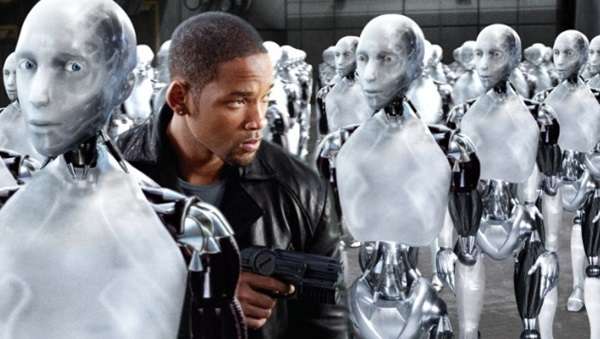
AI offers tremendous benefits when applied responsibly:
- Efficiency: Automates repetitive and data-intensive tasks.
- Innovation: Enables new products and services previously thought impossible.
- Personalization: Tailors experiences in education, healthcare, and entertainment.
- Scalability: Processes vast datasets quickly for better decision-making.
AI’s ability to augment human capabilities has the potential to boost productivity and improve quality of life on a global scale.
6. Challenges and Ethical Considerations
Despite its benefits, AI also raises significant challenges:
Job Displacement
As AI systems automate tasks, some jobs may become obsolete. Preparing the workforce through education and reskilling is essential.
Bias and Fairness
AI models can inherit biases from training data, leading to unfair outcomes in areas like hiring, lending, and law enforcement. Ensuring ethical AI design is critical.
Privacy Concerns
AI systems often rely on large datasets, raising concerns about how personal data is collected, stored, and used.
Safety and Control
Advanced AI, especially AGI, could pose safety risks if not properly controlled. Researchers emphasize the importance of robust safety frameworks to ensure AI aligns with human values.
7. How AI Is Shaping the Future
AI is already transforming industries and everyday life—but its influence will only grow:
- Smart cities powered by AI could optimize energy use, traffic flow, and public services.
- Precision medicine could tailor treatments to individual genetic profiles.
- AI-assisted creativity may produce new forms of art, music, and literature.
- Human-machine collaboration will redefine how work is done across sectors.
Experts believe that over the next decade, AI will continue to accelerate innovation, drive economic growth, and solve complex global challenges—from climate modeling to pandemic response.
8. How to Get Started With AI
If you’re interested in AI, here’s how to begin:
Learn the Fundamentals
Start with basics like Python programming, data structures, and statistics.
Explore Machine Learning
Tools like TensorFlow and PyTorch make it easier to build and experiment with models.
Study Real-World Use Cases
Understanding how AI is applied in business and science helps bridge theory and practice.
Stay Updated
AI evolves quickly—follow reputable sources, research papers, and industry updates to stay current.
Conclusion: AI Is Here to Stay
Artificial Intelligence is not just a buzzword—it’s a transformative force reshaping how we live, work, and interact with technology. From automating mundane tasks to enabling breakthroughs in healthcare and education, AI’s potential is vast. However, responsible development and ethical use are essential to ensure that AI benefits all of humanity.
As we continue to innovate and explore new frontiers in AI, one thing is clear: the future belongs to those who understand and harness the power of intelligent machines.

Related Posts

AI Could “Change Things in a Terrifying Way”: A Deep Analysis of the Risks, Power, and Future of Artificial Intelligence

Why Can the Moon Be Considered a Planet? A Scientific Reassessment of Planetary Definition