Why Can the Moon Be Considered a Planet? A Scientific Reassessment of Planetary Definition
Rethinking What Defines a Planet
For centuries, humanity has sought to classify the celestial bodies that populate our Solar System. The term “planet” has long been associated with objects orbiting the Sun, yet modern science reveals that this definition may be too narrow and outdated. As our understanding of planetary science evolves, so too must our classifications.
In this article, we explore a compelling scientific argument: the Moon may rightfully be considered a planet under a more physically meaningful definition. By examining geophysical characteristics, historical perspectives, and modern scientific proposals, we uncover why the Moon possesses all the essential traits of a planetary body.
The Official Definition of a Planet: A Limiting Framework
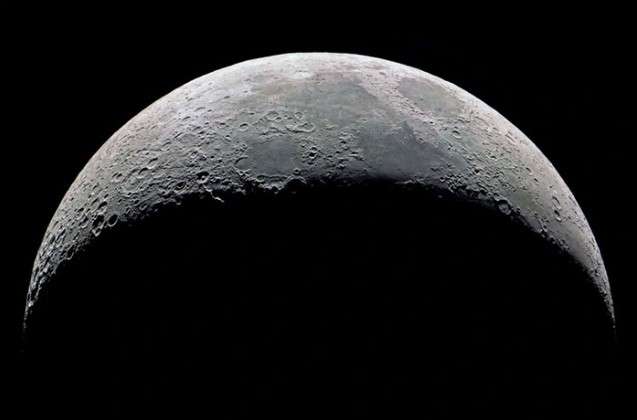
The current definition of a planet was established in 2006 by the International Astronomical Union (IAU). According to this framework, a celestial object must meet three criteria:
- It must orbit the Sun
- It must have sufficient mass for hydrostatic equilibrium (a nearly round shape)
- It must have cleared its orbital neighborhood
While this definition provides clarity, it also introduces significant limitations. The requirement that a planet must orbit the Sun excludes a wide range of celestial bodies that share identical physical characteristics with recognized planets.
The Moon fails this definition not because of its composition or structure, but simply because it orbits Earth instead of the Sun. This raises an important question: Should orbital position outweigh intrinsic physical properties?
A New Scientific Perspective: The Geophysical Definition of Planets
A growing number of planetary scientists advocate for a geophysical definition of a planet, which focuses on what a celestial body is, rather than where it is located.
Under this approach, a planet is defined as:
A celestial body with sufficient mass to achieve a rounded shape and exhibit geological activity, regardless of its orbit.
This definition shifts the emphasis from external dynamics to internal complexity, allowing for a more scientifically grounded classification system.
By applying this model, many objects previously excluded from planetary status—including the Moon—can be recognized as true planetary bodies.
The Moon’s Planetary Characteristics: Evidence from Geology and Structure
1. Spherical Shape and Gravitational Equilibrium
The Moon satisfies the requirement of hydrostatic equilibrium, meaning its gravity has shaped it into a nearly perfect sphere. This is a fundamental trait shared by all recognized planets.
Its diameter of approximately 3,474 kilometers places it among the larger solid bodies in the Solar System, exceeding even some dwarf planets in size and complexity.
2. Complex Geological History
Far from being a static, lifeless rock, the Moon possesses a rich geological history that mirrors planetary evolution:
- Volcanic activity shaped vast basaltic plains known as mare
- Evidence of tectonic processes, including fault lines and crustal deformation
- A differentiated internal structure consisting of crust, mantle, and core
These features demonstrate that the Moon has undergone dynamic internal processes, a defining characteristic of planetary bodies.
3. Layered Internal Composition
The Moon is not homogeneous. Scientific studies reveal a multi-layered interior, including:
- A thin crust composed of silicate rocks
- A partially molten mantle
- A small but distinct metallic core
This level of internal differentiation is a hallmark of planetary formation and evolution, reinforcing the argument that the Moon is more than a simple satellite.
Historical Perspectives: Early Astronomers and Planetary Thought
The concept of what constitutes a planet has evolved significantly over time. In the 17th century, astronomers like Galileo Galilei observed celestial bodies through telescopes and described planets based on their physical properties and observable changes.
Galileo noted that planetary bodies:
- Exhibit surface features such as mountains and craters
- Reflect sunlight rather than emit it
- Undergo visible transformations over time
Under this early scientific framework, the Moon clearly fits the description of a planetary object. It was only later that orbital mechanics became the dominant factor in classification.
Why Orbit Should Not Define Planetary Status
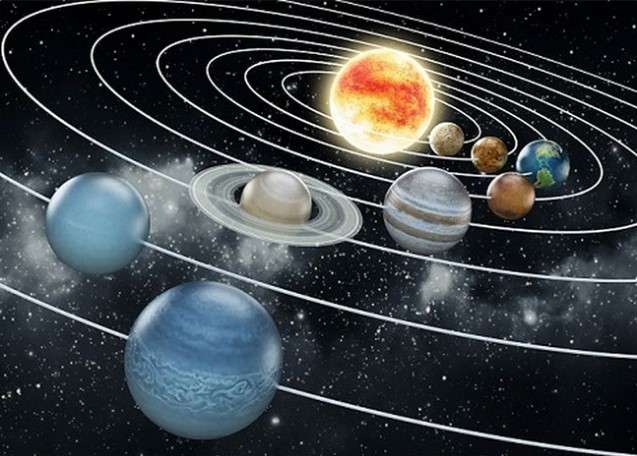
The insistence that a planet must orbit the Sun introduces arbitrary distinctions that do not reflect physical reality. For example:
- The Moon shares more similarities with Mercury than with many smaller satellites
- Some moons, such as Ganymede and Titan, are larger and more complex than the planet Mercury
These comparisons highlight a critical flaw: location does not determine nature.
By prioritizing orbit over composition and behavior, the current definition excludes bodies that are functionally indistinguishable from planets.
The Moon vs. Traditional Planets: A Comparative Analysis
When compared to recognized planets, the Moon demonstrates remarkable similarities:
| Feature | Moon | Mercury |
|---|---|---|
| Shape | Spherical | Spherical |
| Geological Activity | Yes (past) | Yes (past) |
| Internal Structure | Differentiated | Differentiated |
| Surface Features | Craters, plains | Craters, cliffs |
Despite these parallels, Mercury is classified as a planet while the Moon is not. The only meaningful difference lies in orbital hierarchy, not intrinsic qualities.
Expanding the Planetary Family: Implications of Redefinition
Adopting a geophysical definition of planets would significantly expand the number of recognized planetary bodies. This includes:
- The Moon
- Large moons such as Europa, Titan, and Ganymede
- Dwarf planets like Pluto, Eris, and Ceres
This broader classification reflects a more accurate understanding of the diversity and complexity of celestial bodies in our Solar System.
Rather than limiting the term “planet,” this approach embraces the richness of planetary science and encourages deeper exploration.
Scientific Advantages of a Geophysical Definition
Reclassifying the Moon as a planet offers several advantages:
1. Improved Scientific Clarity
Focusing on physical characteristics provides a more consistent and logical framework for classification.
2. Enhanced Educational Value
A geophysical definition helps students and researchers understand planetary science based on observable properties, rather than arbitrary rules.
3. Greater Inclusivity in Planetary Studies
Recognizing more bodies as planets encourages broader research into planetary formation, evolution, and potential habitability.
The Moon as a Planetary Body: A Logical Conclusion
When evaluated through the lens of modern science, the Moon meets every meaningful criterion of a planet:
- It is geologically complex
- It has a layered internal structure
- It achieved gravitational equilibrium
- It evolved through planetary processes
The only reason it is not officially classified as a planet is due to a definition rooted in orbital mechanics, not physical reality.
Conclusion: Redefining the Moon’s Place in the Solar System
The question is no longer whether the Moon can be considered a planet, but rather why it has not yet been fully recognized as one.
As scientific understanding advances, it becomes increasingly clear that planetary classification must evolve. The Moon exemplifies the characteristics of a true planetary body, challenging us to reconsider outdated definitions.
By embracing a geophysical perspective, we align our terminology with the realities of the universe, acknowledging that the Moon is not merely a satellite—but a planetary world in its own right.
Final Insight: A Shift Toward Scientific Precision
The reclassification of the Moon is not a matter of semantics; it is a reflection of scientific progress. As we continue to explore the cosmos, our definitions must adapt to incorporate new knowledge.
In doing so, we recognize that the Moon stands alongside planets not by position, but by nature, structure, and history—qualities that define what a planet truly is.