Death Clock – The AI Application Redefining How We Understand Human Lifespan
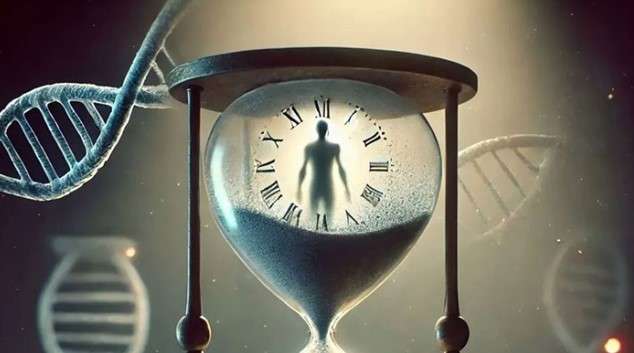
Introduction to Death Clock AI and Predictive Longevity
In an era where artificial intelligence is transforming healthcare, the emergence of Death Clock AI represents a profound shift in how we perceive longevity. This advanced application leverages massive datasets, behavioral analytics, and predictive modeling to estimate an individual’s lifespan with remarkable precision. Rather than offering vague assumptions, it delivers data-driven insights rooted in millions of real-world health records, making it one of the most compelling innovations in modern digital health.
The concept is both simple and powerful: by analyzing who we are and how we live, AI can forecast how long we are likely to live—and more importantly, how to live longer.
How Death Clock AI Predicts Human Lifespan with Precision
At the core of Death Clock lies a highly sophisticated machine learning system trained on over 53 million individuals and thousands of longevity studies. This allows the platform to identify patterns that traditional health assessments often overlook.
Users are guided through an in-depth questionnaire that captures critical variables, including:
- Demographics such as age, gender, and ethnicity
- Medical history, including chronic conditions and hereditary risks
- Lifestyle behaviors, such as diet quality, exercise frequency, and sleep cycles
- Psychological factors, including stress levels and mental health indicators
By synthesizing these inputs, the AI constructs a personalized longevity profile, producing an estimated lifespan range. Unlike static calculators, this system continuously evolves, adapting its predictions as new data and lifestyle changes are introduced.
The Science Behind AI Longevity Predictions
The strength of Death Clock lies in its evidence-based architecture. The AI integrates findings from epidemiology, behavioral science, and clinical research, allowing it to simulate how specific lifestyle choices influence mortality risk.
For instance, the system can quantify how:
- Sedentary habits increase long-term health risks
- Consistent physical activity extends life expectancy
- Nutritional patterns directly impact chronic disease development
This multidimensional analysis transforms abstract health advice into measurable outcomes, giving users a clearer understanding of cause and effect.
Personalized Health Recommendations That Drive Real Change
Beyond prediction, Death Clock functions as a proactive health optimization tool. It delivers tailored recommendations designed to improve longevity, including:
- Nutritional adjustments based on individual risk factors
- Exercise strategies aligned with fitness levels and goals
- Sleep optimization techniques to enhance recovery and resilience
- Stress reduction methods grounded in psychological research
Each recommendation is dynamically updated, ensuring that users receive relevant, actionable guidance as their habits evolve. This transforms the app from a passive predictor into an active partner in long-term health management.
Why Death Clock AI Is Gaining Global Attention
The rapid rise of Death Clock can be attributed to its ability to make longevity tangible and personal. Within a short period, the application has attracted hundreds of thousands of users, driven by curiosity, practicality, and the desire for self-improvement.
Several factors contribute to its popularity:
- Data-backed credibility derived from large-scale research
- User-friendly interface that simplifies complex health analytics
- Immediate, personalized insights that resonate with users
- Practical value for life planning, including retirement and financial decisions
By bridging the gap between scientific research and everyday decision-making, Death Clock has positioned itself as a leading tool in the longevity tech space.
From Prediction to Prevention: The True Value of Death Clock
What distinguishes Death Clock from conventional health apps is its emphasis on behavioral transformation. The predicted lifespan is not presented as a fixed outcome but as a modifiable projection influenced by daily choices.
This perspective empowers users to:
- Recognize the long-term consequences of short-term habits
- Take control of their health trajectory with informed decisions
- Align their lifestyle with measurable longevity goals
In this way, the application becomes a catalyst for preventive healthcare, shifting the focus from treatment to optimization.
The Role of AI in Shaping the Future of Longevity
As artificial intelligence continues to evolve, tools like Death Clock signal a broader transformation in healthcare. Predictive systems are no longer confined to clinical environments; they are becoming accessible, personalized, and deeply integrated into daily life.
This shift enables a future where:
- Individuals can monitor and improve their health proactively
- Healthcare becomes predictive rather than reactive
- Longevity is approached as a strategic, data-driven objective
Death Clock stands at the forefront of this movement, demonstrating how AI can translate complex data into meaningful human outcomes.
Conclusion: A New Era of Lifespan Awareness
Death Clock is more than an application; it is a paradigm shift in how we understand and manage our lives. By combining advanced artificial intelligence, vast datasets, and personalized insights, it offers a unique window into the future—one that is not predetermined, but continuously shaped by our choices.
In a world increasingly defined by data, the ability to predict and improve lifespan represents one of the most valuable advancements of our time. Death Clock transforms this possibility into reality, empowering individuals to live not only longer—but better, smarter, and with purpose.